

November 22, 2026
Home for the Holidays Without Losing Yourself
"I love my family. But I'm already dreading Thanksgiving."
Why the holidays stir things up
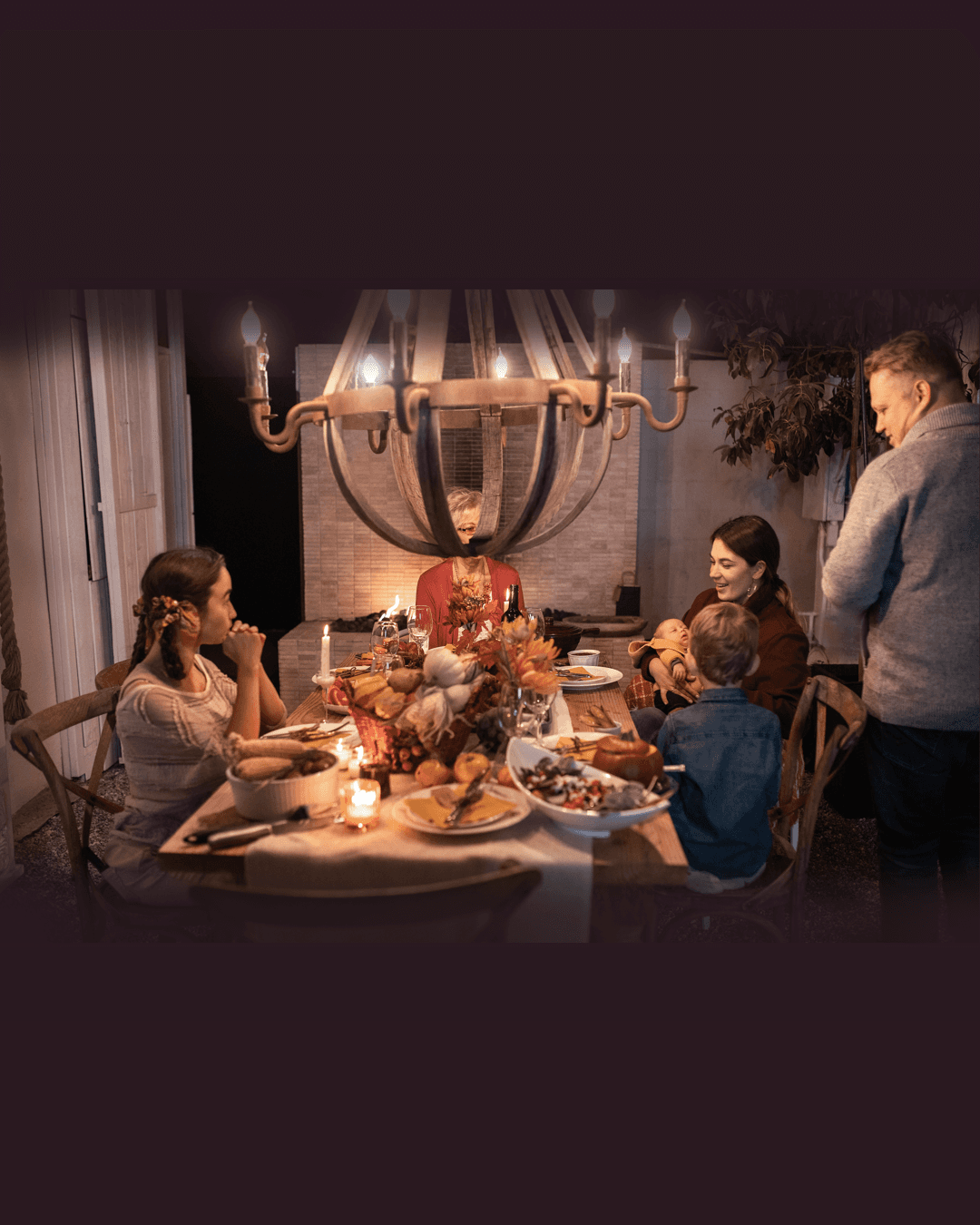
Family gatherings bring everyone back to the same table, and often back to the same roles. The peacemaker, the black sheep, the responsible one, the baby of the family. Old arguments, old comments about weight, jobs, or relationships, and old expectations about who does the cooking and who gets a pass.
Add money worries, travel, tight schedules, and too little sleep, and even loving families feel the strain. You are not imagining it, and you are not alone.
In a national poll from the American Psychiatric Association, 41% of adults expected more stress during the holidays than the year before, up from 28% the previous year. 32% named challenging family dynamics as a worry. Yet 61% said seeing family and friends was what they looked forward to most (APA Healthy Minds Poll, November 2025). Both things can be true: we want to be with our families, and being with them can be hard.
Boundaries are not walls
A boundary is not a punishment or a way to push people away. It is a clear, kind way of telling others what works for you and what doesn't. Boundaries let you stay connected without losing yourself.
Researcher and author Brené Brown says it this way: "Daring to set boundaries is about having the courage to love ourselves even when we risk disappointing others." (The Gifts of Imperfection, 2010)
Before you go
1. Decide what you can give. How long will you stay? Which topics are off the table? What will you say yes to, and what will you say no to?
2. Plan your exit. Drive yourself, set an end time, or plan a short walk halfway through.
3. Have a support person. Agree on a signal with your partner, a sibling, or a friend you can text.
4. Lower the bar. You are not responsible for making everyone happy. A peaceful day is a good day, even if it isn't perfect.
While you're there
• Use short, kind scripts. "I'm not going to talk about that today." "Thanks for your concern, I've got it handled." "I'm going to step outside for a minute."
• Ask clearly for what you need. In DBT (Dialectical Behavior Therapy), a simple skill helps: describe the situation, say how you feel, ask for what you want, and explain why it helps both of you.
• Respond, don't react. When you feel the old heat rising, pause and name what you feel, even silently.
Psychiatrist Dr. Dan Siegel calls this "name it to tame it," a way of "appealing to the left brain's affinity for words and reasoning to calm emotional storms and bodily tension." (Dr. Dan Siegel, The Whole-Brain Child handouts) Saying "I feel judged right now" in your head can be enough to keep you from saying something you'll regret.
After you leave
Give yourself time to recover. Rest, move your body, talk to someone you trust, and notice what went well. If the visit stirred up old pain, that is information, not failure. It may be a sign that some old wounds are ready for attention.
What I see in my practice
The holidays stir up intense emotions in many of my clients. They bring people face to face with painful memories, fears, and family wounds that were never worked through, and with the feeling of being forced to relive them again and again. There is also the anxiety of knowing that every family gathering expects a certain behavior and attitude, and the pressure to pretend that everything is wonderful and that we are happy.
Then comes the nostalgia for those who are no longer with us, because they passed away or because their path took them far from us. They always return in that moment when someone asks about, or mentions, the person who is absent. And there are the comparison conversations, about who has achieved more or who has more, and the discomfort when it’s your turn and you feel you have nothing interesting to share, or that the year didn’t go as you hoped.
In therapy, we work on those old wounds and practice coping skills, so the person can have a pleasant day and connect with the good that comes from being together as a family. We look, person by person, for the moments in the year we can feel grateful for. It is about connecting with yourself and with gratitude for life. It is accepting that there are people and things we cannot change, and that this is okay: we don’t have to control everything, or wait for others to change in order to be happy. It is also recognizing yourself within the group and deciding what role you want to take this year: the one who wounds, or the one who makes peace and offers calm to whoever comes near.
Some people decide to stay home and not take part in the gatherings, knowing they are stepping away from a family tradition. That can be okay, and it shouldn’t be judged as isolation, as long as the person is at peace and it is truly what they want. But if they stay home only to avoid confrontation, and spend the day feeling miserable, that is not healthy. There are ways to protect yourself at a family gathering and still feel safe and at peace, and the tools in this article can help.
However you choose to spend your holidays, what matters is how you feel with yourself, and that the goal is your own peace and growth. Family, with the good and the difficult, is part of our story. If you take part, let it be not out of obligation, but for your own well-being: to know where you come from, who you are, and where you want to go.
You can love them and still protect your peace
You don't have to choose between your family and your well-being. With a plan, a few clear words, and some support, the holidays can be a time of connection instead of survival.
At Amare Integrated Clinical Services (Amare ICS), we can prepare for the hard conversations, set boundaries that feel kind instead of cold, and find new ways of being family.